
Jordan Rakei on his latest EP ‘Between Us’
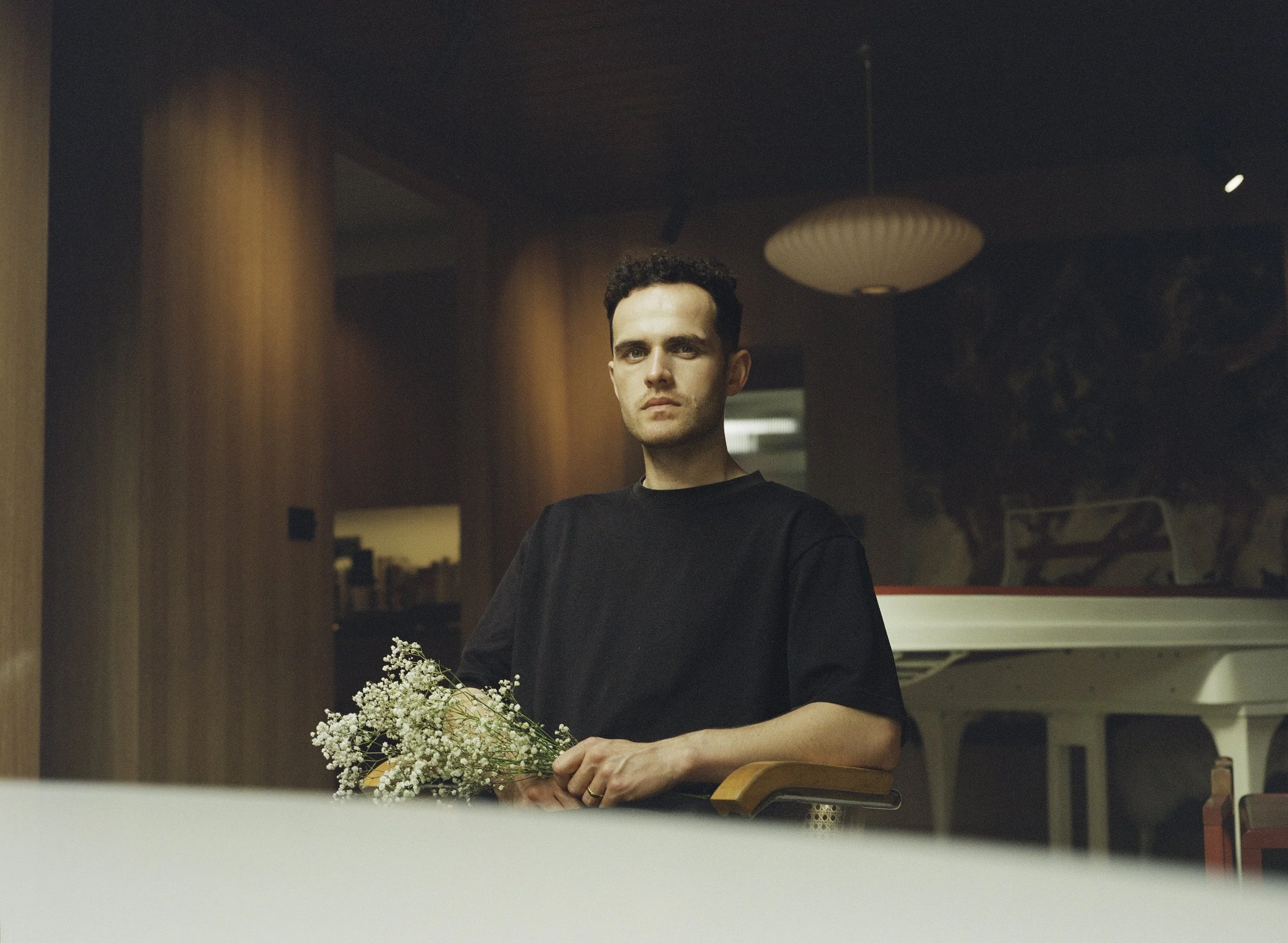
Created during the final chapter of his tenure as the first ever Artist in Residence at the iconic Abbey Road Studios, Grammy-nominated artist & revered multi-instrumentalist, vocalist and producer Jordan Rakei chats to us about his latest EP Between Us - bringing together a carefully curated circle of collaborators FKJ, Jalen Ngonda, Tom McFarland of Jungle, Nubya Garcia and Femi Koleoso of Ezra Collective. Each invited into Jordan’s world for an intense one-day writing session, the result is a body of work that positions Jordan not only as a singular artist, but as a tastemaker and curator with a rare ability to unite distinct voices under a cohesive sonic vision.
Hype Medium: Thanks so much for taking the time to chat! First I'd love to kick off by asking you - how did you land on this concept of ‘Between Us’ and what does it mean to you?
Jordan Rakei: So when I got my residency at Abbey Road, I sort of tried to set these little tasks, otherwise I felt like there was too much you can do with free studio time basically. I was like, “what should I do? Should I make a dance music album? Should I make an orchestral thing?”. So I said I would love to just collaborate loads, and I actually didn't have the vision at the time. I just wanted to work with rappers, rock guitarists, drum and bass, whatever. And through all of those collabs over that 18 months came a lot of these ones, which a lot of them were with people I had never met before. So they were sort of like these blind dates that were set up, and I could cynically leverage Abbey Road’s legacy, and be like, 'Hey, I'm at Abbey Road, do you want to come through?’ (laughs).
HM: (laughs) Who’s gonna say no?!
Jordan: Exactly yeah (laughs). So it was really cool. Like for example, there's Jalen who's very Motown inspired, and we used Abbey Road for old school vibe, like it all had to be off headphones, all instruments. And then I did some sessions with Nubya Garcia, the jazz approach where we just made the song on the spot and did live takes. So every process was very different, and the title is sort of like talking about, I guess, it's a cheeky thing about these songs are between us. Each individual and they were all made in a day, so it's like this little secret of Abbey Road, and the power of these collaborations just powered through so quickly, and we'll keep that sort of secret between us (laughs).
HM: Yeah, I love that approach! Were there any major creative influences that shaped the EP? I guess as you mentioned, you're drawing on the other person's creative world.
Jordan: Yeah, actually that's what it was. It was less of this “I wanted to make this unified sound”. It was more like I wanted to make this really fun collage. So I guess the inspiration was more that it always sort of had this optimistic, upbeat energy, whereas some of my what I would call my own music, my non-collaborative music, sometimes it's moody or ballads or melancholy or big. I like being self-indulgent with that sort of stuff. But when you're collaborating, I treated every track like I was using their sound and how would I do their sound. So my Jalen songs, very Jalen in a way, and my Tom (from Jungle) song is very Jungle vibe, so I was just channeling them, and then what would be my voice in all of that. So no inspirations really, just good vibes.
HM: That’s amazing! And it all kind of pieces together so well on this EP, which sounds so great. ‘What It Gave Me’ with Jalen is one of my favourite songs on the EP. I love how the musical worlds blend together, and it carries a rich, timeless sense of soul as well which I really love.
Jordan: Oh, thank you. It was amazing working with him because he's a multi-instrumentalist, and he’s even what I would call soul music before the 70s wave with like Stevie and Donny and Marvin Gaye. It's very old soul, like post blues. And his concepts - he was like, “We're gonna write this here, it's gotta be a hit. Everything's a hit. Everything's like a melody. Every melody needs to be smacking” because back in the 60s, I think they used to have these hit factories, and they would write these amazing tunes in Detroit. And so he loved channeling that. So we were like writing these chords and he's like, “Man, come on, this can be better!”. His energy was so fun, and I'm very chilled in the studio, like, "Oh, I love that. I'm happy to do whatever”. So it was amazing working with Jalen. We actually made two songs. Sadly only one of them could come out, but maybe the next one can come out another time.
HM: Oh that’s great, I hope the other song eventually gets released too - would love to hear it! And how were you reaching out to do these collaborations?
Jordan: Yeah so the Jalen one for example, we knew each other just from like the London scene, even though he's American and I'm Kiwi. So we had seen each other's gigs and then I was a big fan of his for a while, like he actually supported another friend of mine Olivia Dean years ago, and I was like blown away by his energy. And I'd shared a few festivals with Jungle throughout last summer, and then I met the band, and was hanging out backstage, and I've known Nubya from the first month I moved to London which is crazy. FKJ, I collaborated with like years ago. I had never worked with Femi before, but I know Ezra Collective really well again through the London scene, but I'd never sat in a studio with him and made music, so it was a mixture of people like him and Tom, I’d never really worked with, and then old collabs and friends.
HM: Very cool. You mentioned FKJ and I wanted to chat about ‘Problems’ as well because this is a song that I absolutely love, and again, your styles blend together so well - very intricate and full of depth. What was like the creative dynamic between you two when making this track?
Jordan: Thanks, it was great because we had collaborated about 11 years ago on one of his songs, and this is when I just got my residency and he was in London and I said, “this would be amazing, just come through, let's just play, have a little hang”. And because we had already known each other, and we had chatted loads online the last like 10 years. It wasn't this sort of session where it felt slow to get started. We had already gone straight in, and I'm sure you know, he's like a crazy multi-instrumentalist, and my role in that session was actually like I was the laptop. I was the computer driver, and I was saying, “do this, do that” (laughs) and he would drum, he would play guitar, play bass, play keyboard, play synth. I played a bit of those as well but he was just this super muso, and that was an amazing, amazing day. He's such a good vibe as well. Because he's got a young son, I have two young kids, and it was a nice balance chatting about parenting at the same time, making like a cool fun little beat sort of thing. So good to work with him again.
HM: Yeah I guess it's always good to be able to chat on that personal level as well, and it can bring another element and other creative ideas and influences into the studio.
Jordan: Definitely. Because our careers, even for the last 11 years, have sort of gone on a similar trajectory, he's definitely further along in terms of ticket sales, streaming numbers and all that stuff, but it's nice to ask him questions really transparently as well. I don't get that opportunity to work with another peer, let's say the same size, or even higher, so it was a nice educational day for me as well, like understanding how things work for him. It was just such a great day.
HM: That's awesome! And what were some of your favorite moments in general working on this EP?
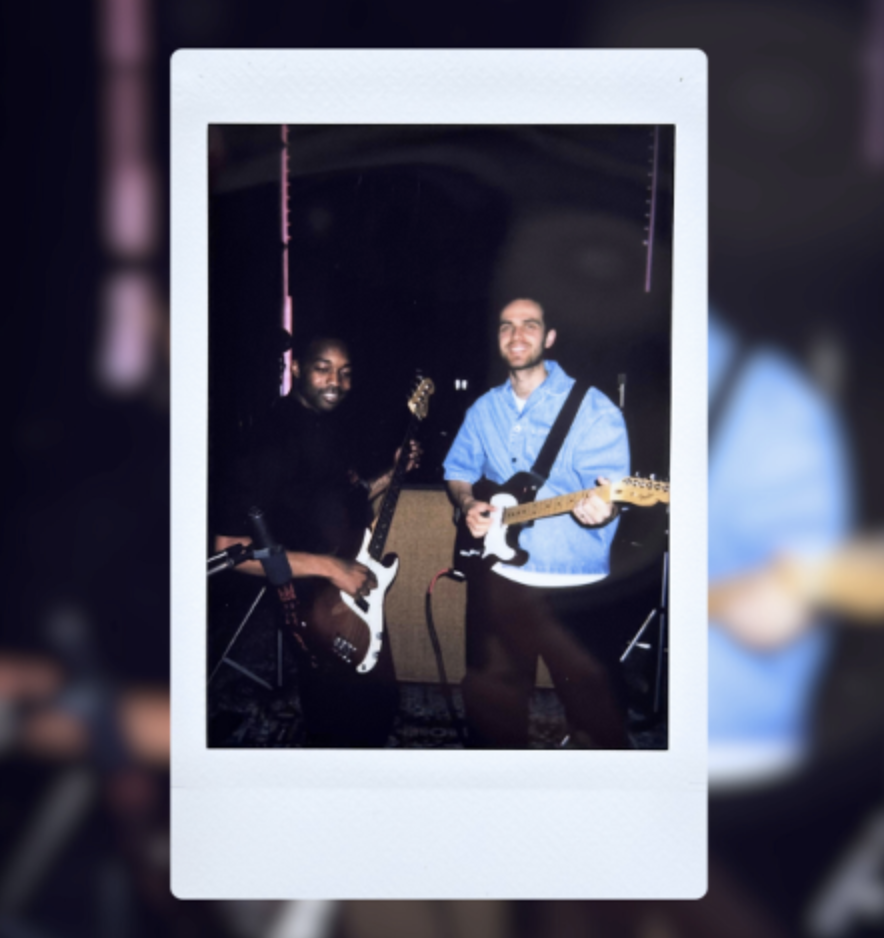
Jordan: The Nubya Garcia session was fun because it was my bassist, Flo Moore, and her drummer, Sam Jones, and it was sort of like this battle of the bands we were joking about. Like we had come together, not only was it like a collab between us, it was a collab between our bands. And what was really funny is, in a way, jazz music can be extremely intricate, extremely advanced because of the improvisational elements. But I sort of thought about that day like any sort of contemporary commercial pop song, where it has a structure. There's a melody and then there's a verse, so when you break it down like that, we were even just talking about it conversationally. Then we're like, we need a little melodic head, we need a some sort of verse, there needs to be a groovy bit that goes up in energy, and then we were talking in more like jazz language. And honestly in about like half an hour, we had written this whole tune and then there was a joke like Nubya or Sam were like, "Alright, let's have lunch, and we'll come back and just like record the tune”. It was so funny, because it was so natural, so easy. It was really like what I'd call my sort of old school approach, that jazz leaning music. So it was so fun to get back into that vibe. Yeah, it's probably one of the highlights.
HM: For sure! Love that. That's so cool to be able to collaborate with each other so organically. And as we're a New Zealand music platform, I'd love to know, who are some of your favorite New Zealand artists right now, and if there's any songs in particular that you love - either something recent or in the past?
Jordan: I actually love this producer. I think he might be based in Wellington. I met him, he's a drummer for Louis Baker, another singing friend of mine, years ago. His name's Cory Champion but I think his artist name is Clear Path Ensemble. It’s like a really amazing mixture of percussive acoustic elements with electronics, so it’s similar to like Fourtet or Floating Points or Bonobo. I love his music, and I still actually listen to lots of Freddy's and Electric Wire Hustle when I'm on my dog walk or looking for some inspiration. Sometimes I find it better to listen to music from my teenage years because I'm not judging it. Because anything I listen to now, no matter how amazing it is, I'm sort of thinking about the snare sound or the vocal. But when I just need to zone out a little bit, I chuck on ‘Chaser’ by Electric Wire Hustle, or Fat Freddy's Drop like ‘Ernie’ or even ‘Hope’. So like that really old school Kiwi music, they're probably my favorite staples. I’d definitely put Bic Runga in there as well - “Ghost in Your Bed”, I love that tune.
HM: I love that, the kiwi classics. As you say, in the musical mind, you’d always be thinking about the production of a song, listening to how it all works together.
Jordan: (Laughs) It's funny, it's obviously an asset because sometimes if you're making a song, you can break it down and be like “how can I do that?”. But if I'm in a restaurant or something with my wife and there’s a song playing, I'm even like, “sorry, what'd you say? I’m just listening to this reverb right now?” (laughs). It's a bit of a nightmare as well.
HM: (Laughs) No, it’s such a skill! And something I wanted to talk to you about is that I love how transparent you've been with the pieces of content you've been sharing online around working in the industry, especially your videos around “don't sweat the skill gap” and “sometimes limitation is your strength” and also the importance of curiosity and consistency. So for other artists and musicians and creatives out there, what's one of the biggest lessons that you've learnt in your career, and some pieces of advice that someone has given you along the way that stuck with you?
Jordan: That could take an hour (laughs). No, so one thing, it's quite a hard thing to say because it sometimes can come across as tone deaf but I mean this in the most positive way possible, is doing as much as you can yourself. Constantly learning. To give you an example, I know so many talented singers that told me in 2015 when I moved to London “I wish I could produce then I could make my own music”. And it's 2026, and they still don't know how to produce and I know for sure if they put 30 minutes a day in, they could have.
Someone told me that years ago, when I was actually living in Australia, they said, "You want to turn your time when you're bored into feeling like you want to just play with music” rather than every time someone sits down, they think “I need to make my next single” or “I need to finish this exact lyric”. I don't know how much in the day they can fit because they might work a normal job, or they might be raising a family or something - but you’ve got to give yourself a part of your day every day to that curiosity. It's like feeding it because three weeks in, you realize it's flowing more because the consistency of it is going. And actually for me, in the depths of newborn era or mid touring, I'm still on the plane every day, writing. I'm freestyling into my voice memo or like I'm just getting those juices out. I think that's the best thing because if you're quite outcome-based about your creative output, then it becomes this weird transactional “I must write. It will come out. People will hear it. Will they like it?”. If you just think every day, “I'm just going to play today, see what happens. This song might never come out. I'm just playing on the piano for no reason for half an hour”. I just think working on that muscle is my best advice.
I think it's such a small answer, but I feel like no one actually does it though. But that's why it can be tone deaf, because sometimes people are raising a family and getting home from work at 7pm and they're knackered, and you're asking them to fit in like 30 minutes. I don't know - there's a little window surely somewhere in that day to give to yourself.
HM: Yeah, I think that's so important. And I guess even if you're not sitting down with the tools, there's still space to be creative whether it's thinking about lyrics or melodies in your head, and just dedicating the time to be intentional and be thinking about it.
Jordan: Definitely, yeah exactly. I think I might have got that from years ago when I started meditation. Another teacher, which is sort of related to this, he said people sit down and meditate, and they're thinking “this is going to de-stress me” or they have an outcome around it. But the thing he said that really stuck with me, and I sort of apply this to creation as well, is you're giving yourself time. You're so lucky, you've actually given yourself 10 minutes today. Sit there - see what happens in the brain. What are you going to think about? It's like that act of giving back to you, if that makes sense, is so hard. Because even me, I'm actually like a people pleaser. I say yes a lot to people and to things I don't want to do, but I still actually manage to give myself time. So I can't imagine someone out there that's so good at turning down all these opportunities, and they're giving themselves time. They're like these superheroes to me (laughs). It's a skill, I think, just appreciating like the spirit, the curiosity and all that stuff. That would be my biggest advice.
HM: Yeah, I absolutely love that answer. I really connected with what you said about detaching from the outcome, and then just creating to create, or just playing to play, and then seeing what happens. And one question that I wanted to ask you, can we expect more music from Dan Kye in the future?
Jordan: Oh, that's actually so funny. I've been talking to my friend today about that. Because I was wanting to come out at Abbey Road with like collaborations thing, I want to come out with a double album, and I want to come out with a Dan Kye project that felt like elevated or something. I'm in the process of, you know like the label will say I can never say this, but at some stage this year, there'll probably be a new album at some stage. I don't know the timeline - you heard it here first (laughs). It's funny when you release an album, I've already made it and it's getting mixed, and then it's getting mastered, so I've got all this time actually to make music again, and I'm going to spend this summer, so like the northern hemisphere summer making Dan Kye. That's actually the most fun I have making music because in a way, the outcome is just good vibes. You want to have something that's high energy, upbeat, dance music and so it's quite fun having that as like a little rule. Just in summer, it's going to be sunny, my studio's in my garden. It's just going to be a good vibe, doing a bit of gardening, doing a bit of beat making. It will be nice (laughs)
HM: Wooh that’s exciting! That's a nice combo - gardening and beat making (laughs). I first discovered Dan Kye during lockdown, and I was like “I love this artist” and I don't know where I found it. And then I realized it was you, and then I was like “oh, of course, I love it” (laughs).
Jordan: (Laughs) Oh that’s so cool. I actually had someone come up to me at a Dan Kye DJ night and say “oh man, I love your music”. I was like, “oh, thanks man. I actually have another artist project Jordan. It's my main thing. It's more like, you know, electronic soul”, whatever. He's like, “I’m not keen on that mate. I like this dance music” (laughs). I love that Dan Kye has his own actual fans and they're not just all my fans. It’s quite cool.
And what's really funny about my Dan Kye project, I mean especially now I'm a parent but even before, I'm not even someone that really goes clubbing or anything. So I come at dance music with like a different weird lens on it. Because I'm just thinking about what I would like to dance to, rather than “would this pop off in Ibiza or Berlin?”, like some late night thing. I don't really know what's good or what makes it work. In a way, I go back to those old influences of my parents, like disco and Motown and think it's got a bit of that vibe just with the modern electronic thing.
HM: That’s a great approach, letting instinct and personal perspective lead the way. What else do you have planned for the rest of 2026 - you already mentioned a bit more space to write music?
Jordan: Yeah, loads more writing music. It's a pretty quiet summer actually in terms of playing shows, but it's going to be a busy year. I don't know the dates but I've got an album coming, and I'm actually really excited because it's a bit different, and it's another little baby and project I have coming from my Abbey Road residency, and it's a different sound. Because obviously I've recorded it there, it's quite big and it sounds different to stuff I've done, which always makes me excited. Closer to release date, I’ll probably feel that apprehension because every time I've made an album, there's been a couple of my fans that naturally, want that old sound and then there's a couple of new fans that join because there's a new sound. And then they sort of collide, and then the next project is the same because I'm always changing. And this is another one of those moments where there will be some people that want to stay over here, which is fine. I totally get that actually because I even have that, with like Prince. I love some of his albums, I actually don't like some of his albums but I like Prince as an artist. I don't really mind, but in the modern era, in consumerism, it’s quite cutthroat now because there's so much music. If someone doesn't like an album, they're like “I probably won't check the next one now”. There's a bit more pressure to stay relevant in the retention era.
HM: Which is crazy! I do love when artists evolve though. I think it's so interesting, tapping into different sounds as you say, and then hearing a different side of them. Because you've already got that album that you love, so for them to explore other sonic areas is always exciting.
Jordan: Yeah and like let's say one of my favorite artists Fat Freddy's Drop, and one of my favorite albums “Based on a True Story”. Obviously a majority of my love for that album is the music, but a lot of it is also the nostalgia of the age and the memory, and playing basketball with my mates. So when people are comparing new music, they're also comparing to a twilight era of their life that an album really has an attachment to.Because I even said if Fat Freddy's Drop made a better version of that album now, I probably wouldn't resonate with it as much because I'm a different age. I mean, I’d probably love it but it's a reflection of someone's life, not their actual taste.
I made a song on The Loop, my last album, called “State of Mind” which is quite similar to my 2015 EP. It's like neo-soul, and I always get a couple of these comments like “we want old Jordan back” and I was like, “this is literally old Jordan” but you have an attachment. You have this really nostalgic memory of that record and nothing will replicate that. You can't. And that's why it's fine and it’s always good I think to constantly grow to keep that fan that's super devoted to that album interested as well, because if I made the same album four times, which some artists do, I think that fan would be like “it's still not as good”. So you just got to do your thing, you've got to trust your own gut.
HM: I agree, because if you're trying to follow what fans are wanting to listen to, and that's not necessarily where you are creatively, then it's not going to translate the same either.
JR: Exactly, I agree.
HM: Well we’re up to our last question and this is a question that I end with all our guests. If you could say one thing to every person in the world, what would that be?
JR: Woah, oh crikey that’s good. I think it’s something similar to that question before. I think it’s the concept of, because I learnt this again through meditation is, giving yourself love. With that it’s like time, care, respect and curiosity. When you do that, obviously it’s hard to see, but it has an impact on everyone that comes to touch with you because you have this vibrant spirit or vibrant energy. And so, in a way it’s being selfish - selfish is okay for those little moments. So I don’t know what the profound quote is word by word, but it’s the idea that if everyone did that on a whole global scale, I think everything would improve and everyone would be slightly happier. If you’d treat that person slightly better and it would feed into this. So, it’s giving yourself love.
Thanks so much Jordan! Make sure to keep up with him on Instagram, Facebook, TikTok, Spotify or Apple Music.